News
Share


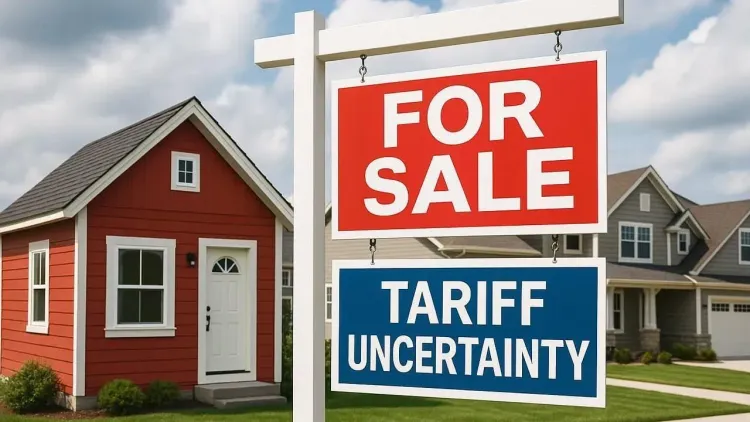
Tariffs are causing uncertainty in the real estate market, leading to a slowdown in the typically strong spring season.
Real estate broker Jay Ghanem notes that potential tariffs on aluminum and steel are impacting construction costs, which could drive property prices higher.
Despite recent interest rate cuts by the Bank of Canada, buyer sentiment remains unchanged due to job stability concerns and market uncertainty.
Tariffs—whether they happen or not—are already having a drastic impact on real estate’s normally strong spring season. Buyers are holding out, uncertain of what's to come, meaning the entire market is in limbo until the impact of tariffs becomes known.
Jay Ghanem is a Real Estate Broker with Royal LePage Real Estate Services and Jay Cares Real Estate in Oakville, Ontario. We asked him for his insights into the current market, given that both buyers and sellers are adopting a "wait and see" approach as they ride out a period of instability.
The great unknown: "The unknown is affecting everyone, specifically the buyers," Ghanem explains. "Most of them are still on the sidelines, trying to understand what's going on and hoping to understand what's going to happen." The uncertainty surrounding potential tariffs—particularly on aluminum and steel—has already impacted construction costs, which, Ghanem points out, could have a double impact on the market. "This will definitely affect the rising cost of construction," he says. "If anything, it would bring prices of properties higher."
Spring hasn't sprung: The traditionally strong spring real estate market, which typically sees an uptick in sales, is not following its usual pattern this year. "March should be the beginning of a good sales market, but unfortunately sales are down compared to February," Ghanem states. "That's not the historical curve or trend of sales. Usually, you would see sales increase as you head into spring, but this time, they've decreased." He points out that rising inventory is putting additional pressure on the market, as more homes are listed without a corresponding increase in sales.
Ineffective interest rate cuts: Ghanem notes that while the Bank of Canada has recently lowered interest rates, the anticipated positive impact on the real estate market has yet to materialize. "We've been cutting rates for a couple of months now, but we don't see buyer sentiment changing," he says. "Even with lower rates, there's so much inventory in the market that the amount of available buyers can't compensate." The prevailing uncertainty about job stability and future economic conditions, Ghanem believes, is a major deterrent for potential buyers. "People are staying on the sidelines because they don't know if they'll keep their jobs in the coming months," he adds.
Future watch: Looking ahead, Ghanem remains cautiously optimistic, though he acknowledges that the market's trajectory will depend heavily on what's to come. "If the tariff situation is resolved, it will definitely boost the market quickly," he says. "But if the trade war continues, the uncertainty will continue to threaten the market."
The cycle continues: Ultimately, Ghanem remains hopeful, pointing to previous market cycles that have rebounded from times of uncertainty. "We’ve been through tough times before, like during COVID-19, and we came out of it stronger," he says. As the market waits for clarity on the tariff front, Ghanem believes that real estate cycles are inherently up and down, and the current situation, while challenging, is part of the broader ebb and flow of the industry.
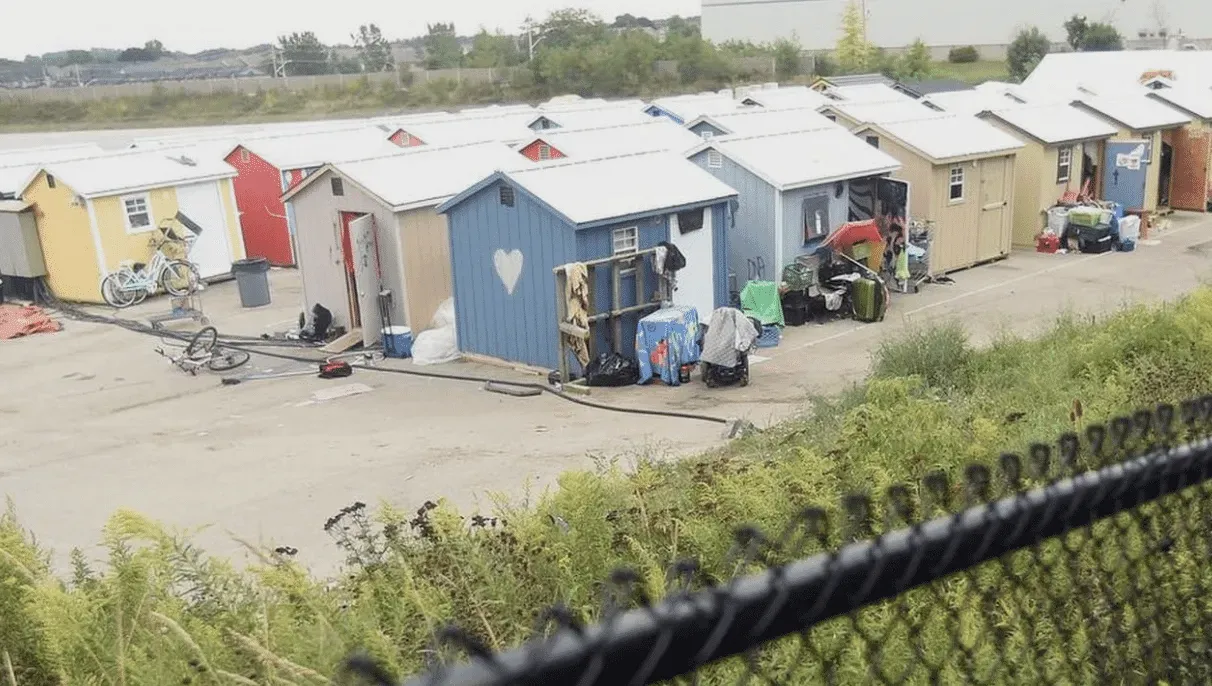
Volunteers unite to protect a vital homeless support service in Kitchener.

The technology behind Canada’s Olympic House could influence future homes.
Discover whether Toronto is truly ready for high-density living, why buyer expectations are changing, and what experts say this means for future homebuyers.
Canada plans to use public land to accelerate affordable housing development.

How Bank of Canada rate cuts could impact housing affordability in Vancouver.

Tesla’s home technology allows families to generate income from solar energy.


