News
Share


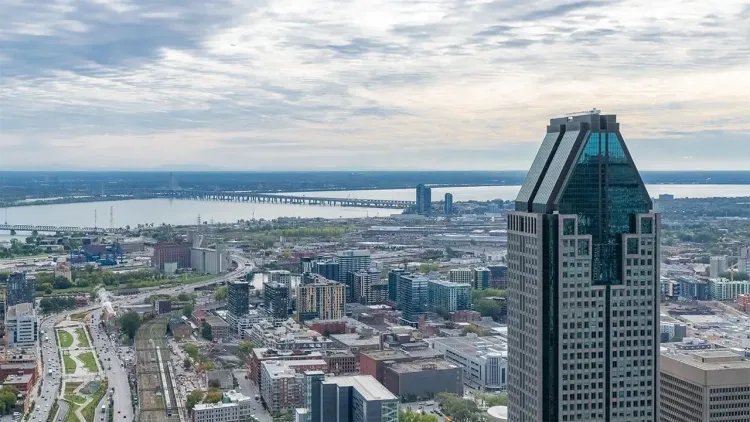
Montreal’s commercial real estate market is on fire, drawing in intense competition from investors both domestically and from the US. Interest rates are easing and the rental market remains resilient, so it’s no wonder commercial properties are seeing soaring demand.
We spoke with Jaclyn Rabin, real estate broker for Keller Williams Prestige and owner of Jaclyn Rabin Immobilier Inc., to understand what’s making the commercial real estate market so hot this year.
Red-hot market: Montreal’s commercial real estate market is experiencing a surge in competition, especially for multi-unit buildings in prime neighborhoods. Rabin describes a scenario she hasn't seen since the early days of the pandemic. "Every multi-unit property—let’s say 20 units or more—in a prime Montreal neighborhood like Outremont, Côte-des-Neiges, or NDG is getting multiple offers. I’m seeing 13, even 15 bids on these buildings, which is something I’ve never seen before. Even older properties that need significant work are selling at or well above the asking price. It’s been mind-blowing this year."
Buyers look for opportunity: "These are buyers that are looking for opportunity. They want to optimize properties. They want a building that’s got meat on the bone," Rabin explains. "Even if they’re paying a bit of a higher price for it, or what we'd call a low cap rate, which means that the rents are pretty low in relation to the purchase price that you’re paying, they’re seeing that the opportunity is there because the rental market is still really strong."
Adding to the market’s appeal is a recent decision by the Tribunal Administratif du Logement, which increased the permissible rent hike to an average of 5.9%.
No foreign buyer ban on commercial: While Canada has a foreign buyer ban on residential properties, commercial real estate remains open for investment, and American buyers are taking advantage. "The foreign buyer ban doesn’t apply to commercial properties, so investors can still purchase buildings with five or more units. And for Americans, buying here is relatively affordable—‘cheap’ might not be the right word, but it’s certainly less expensive. The exchange rate is highly favorable," says Rabin. "If there’s a good opportunity to optimize, why not diversify your portfolio? I have a lot of U.S. investors eager to enter the Montreal market."
Many offers on North and South shores: The island of Montreal remains highly competitive, with numerous offers on the table for many commercial properties. "The number of offers on properties in the North and South Shore always shocks me—it’s wild," says Rabin. "The demand for multi-residential buildings is just as surprising. I’ll put in an offer for a client, and the other broker will say, 'Oh, we already have seven offers on the table.' And I’m like, 'Excuse me? Okay, we better rethink our offer.'"
New year momentum: While January typically sees a slowdown in real estate purchases, this year was an exception. "December is an interesting month because everybody wants to get their last-minute purchase in before the end of the year," Rabin notes. "January tends to not be great, but our January this year was pretty great."

Volunteers unite to protect a vital homeless support service in Kitchener.

The technology behind Canada’s Olympic House could influence future homes.
Discover whether Toronto is truly ready for high-density living, why buyer expectations are changing, and what experts say this means for future homebuyers.

Canada plans to use public land to accelerate affordable housing development.

How Bank of Canada rate cuts could impact housing affordability in Vancouver.

Tesla’s home technology allows families to generate income from solar energy.


